Experimenting with urban consultation through collective digital modelling
As part of the Urbanités Numériques En Jeux project (UNEJ), carried out within the Territoire apprenant contributif, we developed an urban consultation method that combines collective modelling in Luanti with more traditional participation tools. From 2020 to 2024, it allowed secondary school pupils in Seine-Saint-Denis to imagine new designs for their playground, their neighbourhood and then the surroundings of the Olympic Village. Their proposals are gathered in a travelling exhibition.
It was co-designed with the architects of O'zone Architectures and LAO SCOP and developed throughout the project.
The method
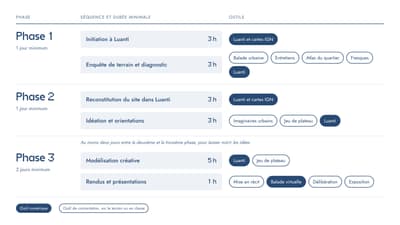
The workshops chain activities that alternate time on screen and time in the field. An urban walk, interviews with residents or a board game on an aerial photo feed the modelling, which in turn leads to new discussions. Digital tools do not replace the proven tools of urban consultation, they add a territory that everyone can rebuild, transform and explore with others.
The set-up
It relies on Luanti, a free alternative to Minecraft. With Thomas François, we tested and then built the base of a dedicated server, importing with the tools of the IGN, the French mapping agency (notably its Minecraft à la carte service), a huge voxel map of Seine-Saint-Denis based on real data and open day and night.
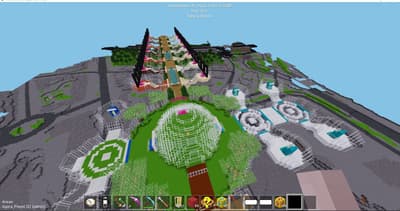
We then had to organise this territory so it could frame the workshops. We chose and configured mods and developed the missing ones. A lobby welcomes players when they connect, and signposted teleporters send them to the activities and to the spaces set aside for each school. Free building zones let players get to grips with the game without losing the inventiveness of play. The mods developed for the project, which make it possible to create groups of players and reserve areas for them, are now shared on the French Ministry of Education's forge for digital commons.
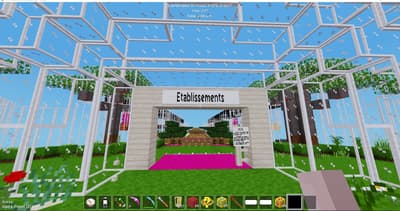
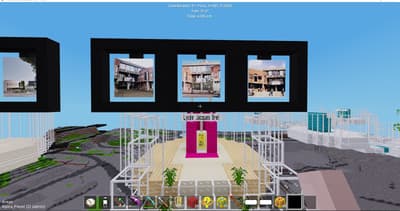
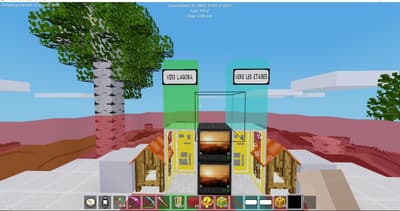
To keep a record of the server, we filmed a guided tour with Maxime Barilleau, then an English teacher and digital lead at the Collège Raymond Poincaré, who coordinated the project for the DANE.
The final report
The project ended with a report submitted to the Créteil education authority in November 2024. It covers four years of experimentation, twelve days of teacher training, ten schools, about twenty teachers, nearly three hundred pupils and more than a hundred workshop sessions.